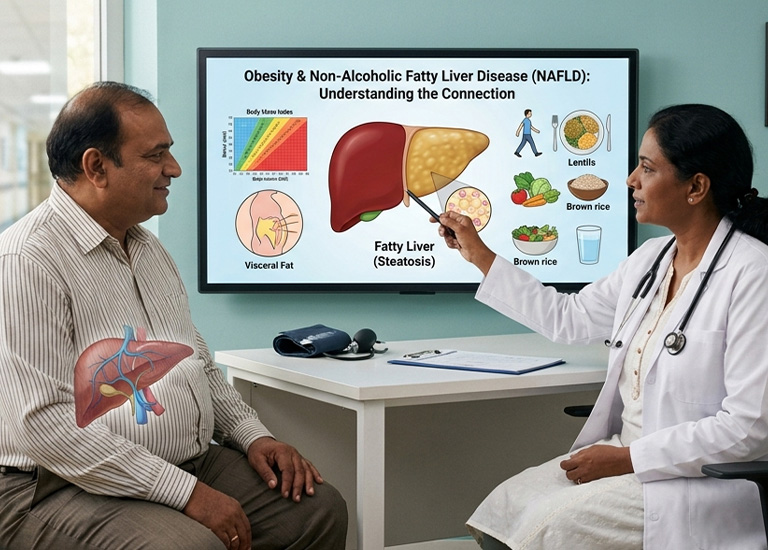
When we talk about the health risks of carrying excess weight, heart health and diabetes usually dominate the conversation. However, there is a quiet, often symptomless crisis happening right inside our abdomens that deserves urgent attention: the impact of obesity on liver health.
The clinical link between obesity and fatty liver disease is one of the most critical health conversations of our time, yet it often goes unnoticed. Excessive body weight is now recognized as the leading driver of fatty liver disease. When the body stores excess fat, it begins accumulating inside liver cells, triggering silent inflammation. The data is clear: up to 75% of individuals living with obesity have MASLD, and that number climbs to over 90% in cases of severe obesity.
Dr. Sangeetha Thanaraj, UK-trained Consultant Gastroenterologist, Hepatologist, and Metabolic Medicine Specialist, notes that there is a silver lining: obesity is the single largest risk factor for fatty liver disease that is completely reversible. Because the liver is incredibly resilient, targeting the root metabolic causes through sustainable weight management and lifestyle optimization can halt disease progression and fully protect your long-term health.
What is Fatty Liver Disease and Its Types?
Fatty liver disease occurs when excess fat builds up inside liver cells. While a healthy liver contains a minimal amount of fat, an accumulation exceeding 5% to 10% of the organ’s total weight marks the onset of clinical fatty liver disease.
This condition is broadly categorized into two types:
- MASLD (Metabolic Dysfunction-Associated Steatotic Liver Disease): Formerly known as Non-Alcoholic Fatty Liver Disease (NAFLD), this type is directly rooted in metabolic health, insulin resistance, and excess body weight. It is not caused by heavy alcohol use. The advanced, aggressive stage of MASLD is MASH (Metabolic Dysfunction-Associated Steatohepatitis) wherein fat buildup begins triggering active liver inflammation and cellular injury which can eventually lead to cirrhosis or liver failure.
- Alcohol-Associated Liver Disease (ALD): This type is caused directly by heavy, long-term alcohol consumption. The liver breaks down most of the alcohol a person drinks, but the metabolic process releases toxic byproducts that damage liver cells, trigger inflammation, and force the organ to accumulate fat.
The Biological Link: Obesity and Liver Health
To understand the connection between obesity and liver health, we have to look at how the body processes energy. When a person carries excess weight, it directly alters the body’s normal storage mechanisms, frequently leading to metabolic syndrome and insulin resistance.
This weight-related strain causes a direct chain reaction in the body:
- Fat Storage Overflow: When standard fat cells become overwhelmed by excess weight, they can no longer safely store energy.
- Bloodstream Influx: Because the standard storage is full, the body releases an excess of free fatty acids directly into the bloodstream.
- Liver Overload: The liver acts as a filter and absorbs these circulating fatty acids to process them.
- Cellular Accumulation: When the influx of fat outpaces the liver’s ability to burn it off, the excess fat deposits directly inside the liver cells.
- Metabolic Stress: Over time, this constant fat accumulation triggers chronic liver inflammation and cellular stress, which can eventually impair long-term liver function.
Fatty Liver Disease Symptoms
Because early-stage MASLD rarely presents outward signs, significant fat buildup and inflammation can develop silently. When symptoms do emerge as the condition advances, they typically present as:
- Persistent, unexplained fatigue or physical exhaustion
- A dull ache or heavy discomfort in the upper right side of the abdomen
- A general feeling of abdominal fullness or mild swelling
- Unexplained loss of appetite or nausea

“Fatty liver disease is fundamentally a metabolic crisis, not just an isolated liver issue. It develops without any warning signs. But the good news is that it is completely reversible. By addressing the root metabolic cause rather than just managing symptoms, we can halt liver damage, clear accumulated fat, and fully restore your vitality.”
Do All Individuals with Obesity Get MASLD?
A common question we come across is can obesity cause fatty liver disease or if every obese individual will develop MASLD. The clinical data shows an incredibly high probability, but it is not completely universal. Visceral fat distribution (fat wrapped around internal organs), genetics, and overall metabolic health play massive roles.
However, the statistical link cannot be ignored: standard obesity increases the risk of MASLD up to 75%, and that likelihood climbs past 90% in cases of severe obesity.
How is MASLD Diagnosed?
Because early-stage MASLD presents no outward symptoms, hepatologists rely on precise diagnostic tools to detect fat accumulation and monitor liver health.
At The Thanaraj Speciality Hospitals, Dr. Sangeetha Thanaraj, leading fatty liver specialist in Thoothukudi, may prescribe the following tests:
- Liver Function Tests (LFTs) to check for elevated liver enzymes
- Routine Abdominal Ultrasound to check fat presence in liver
- FibroScan to check liver stiffness and stage scarring
- Lipid Profile & HbA1c for blood sugar & cholesterol levels
Targeting the Root Cause: Modern Fatty Liver Treatment
Modern fatty liver treatment goes beyond just hiding symptoms. Clinical interventions focus on comprehensive metabolic restoration to achieve permanent therapeutic outcomes:
- Reversing Insulin Resistance: Utilizing targeted medical therapies to improve how the body handles glucose, which stops the constant overflow of fat into the liver.
- Decongesting Liver Cells: Actively breaking down the toxic lipid buildup trapped inside the cells to eliminate ongoing inflammation.
- Fibrosis Prevention: Deploying advanced medical protocols to protect the liver’s structural integrity and stop early inflammation from hardening into permanent scar tissue.
- Customized Metabolic Care: Treating the patient’s entire metabolic profile to simultaneously reduce risks for related conditions like Type 2 diabetes and heart strain.
Lifestyle & Diet Optimization: Implementing a structured plan to reduce overall body weight and directly clear fat from the liver.
Are Lifestyle and Diet Changes Alone Enough to Treat Fatty Liver?
For early stages of obesity and fatty liver disease, structured lifestyle shifts serve as the foundational cure. However, advanced clinical cases often require a combined medical strategy alongside daily habits:
- 7% to 10% Targeted Weight Loss: The clinical threshold required to completely reverse liver fat accumulation.
- Targeted Nutrition: Moving away from ultra-processed foods to actively calm inflammation.
- Muscle Strengthening: Physical optimization to improve insulin sensitivity and boost metabolic rate.
- Integrated Medical Support: Combining lifestyle shifts with expert-led clinical care for permanent, sustainable recovery.
Visit The Thanaraj Speciality Hospitals, Thoothukudi
Managing fatty liver disease in Tamil Nadu requires a specialized clinical approach that connects digestive care with metabolic health. As a UK-trained specialist uniquely dually qualified in Gastroenterology, Hepatology, and Metabolic Medicine, Dr. Sangeetha Thanaraj bridges this critical gap.
Instead of treating obesity and fatty liver disease as isolated issues, she delivers 360-degree, individualized care plans that target the root metabolic triggers. By combining advanced hepatology diagnostics with evidence-based obesity management and precision medical nutrition, she empowers patients to actively reverse liver fat and achieve long-term clinical success.
Don’t wait for silent inflammation to impact your long-term health. Take your first step toward permanent reversal and metabolic vitality today.
Book Appointment Now: +91 96267 30003 (Consultation by prior appointment only)
Address: 9, Chidambara Nagar Main Road, Thoothukudi, Tamil Nadu, India – 628001
Email: drsangeethathanaraj@gmail.com
Google Profile: Dr Sangeetha Thanaraj – Consultant Gastroenterologist and Liver Specialist